
Hot Keywords:Scooptramjaw crusherSand Making Machine
With the continuous boom in infrastructure construction, artificial sand has become the core alternative to natural sand. Granite, with its high hardness, strong wear resistance and abundant reserves, has become the preferred raw material for sand making. However, granite has a Mohs hardness of 6-7 and a compressive strength of 100-300MPa, which places extremely high requirements on the wear resistance, crushing efficiency and stability of sand making equipment. Many investors fall into the predicament of "high equipment loss, substandard output and unmarketable finished products" due to blind selection. Today, this professional granite sand making machine selection guide will help you avoid misunderstandings, accurately match equipment, and make your hard rock sand making project profitable stably.
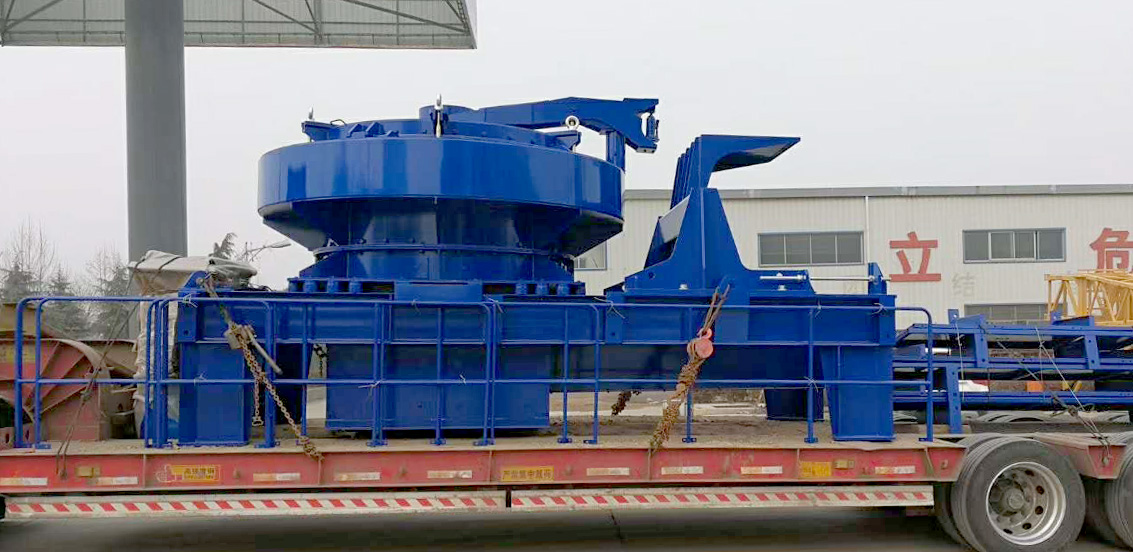
The core premise of selection is to understand your own needs — do not blindly pursue "high-end top configuration" or covet "low-price bargains". The most cost-effective choice is to fit your production capacity, raw material characteristics and finished product requirements. Many investors first ask "which sand making machine is the best" when starting, but ignore their core demands: is it a small sand factory with a daily processing capacity of less than 300 tons, or a large mine with a daily processing capacity of thousands of tons? Do you produce ordinary construction sand or high-standard concrete sand? Clarifying these two core issues can narrow down the selection scope and avoid the waste of "a small horse pulling a large cart" or "overkill".
In view of the hard rock characteristics of granite, the wear resistance of equipment is the top priority of selection. Traditional impact sand making machines are prone to rapid hammer wear and frequent replacement when processing granite, which not only increases operation and maintenance costs, but also interrupts production progress. At present, the most scientifically efficient process in the market for granite sand making is the combination of "impact crusher for crushing and sand making + hydraulic roller sand making machine for shaping". This combined process can not only solve the problem of difficult crushing of hard rock, but also optimize the particle shape of finished sand, which is the key to improving the added value of finished products.
For granite sand making, the scientific and efficient process is: first, use an impact crusher for crushing and sand making. Taking advantage of its "stone-on-stone" crushing principle, the impact crusher can quickly crush large granite into coarse sand that meets the sand making requirements, effectively solving the problem of high hardness and difficult crushing of granite. It has high crushing efficiency and can quickly process large pieces of granite into coarse sand, laying a solid foundation for the subsequent shaping link. Then, the coarse sand is sent to a hydraulic roller sand making machine for refined shaping. As the "shaping king" of granite sand making, the hydraulic roller sand making machine is especially suitable for small and medium-sized sand factories and scenarios with high requirements for finished product particle shape.
The hydraulic roller sand making machine adopts the double-roller extrusion shaping principle, without hammer heads or screens. Its core components are made of high-chromium manganese steel or tungsten carbide overlay roller skins, whose wear resistance is 3-5 times higher than that of ordinary materials. It can withstand the long-term wear of granite and greatly reduce the frequency of vulnerable parts replacement. Some users feedback that after adopting the combined process of "impact crushing + roller shaping", the hydraulic roller sand making machine does not need to replace core components for half a year, while the traditional single equipment needs to be maintained three times a month. At the same time, it is equipped with an intelligent hydraulic system, which can automatically adjust the roller gap and realize overload protection. When hard objects such as scrap iron are encountered, the roller automatically retreats to avoid damage to the host, and it can also operate normally in rainy seasons, with strong adaptability to wet materials and muddy materials.
What is more critical is that after the shaping of the hydraulic roller sand making machine, the finished sand has a cube particle ratio of more than 85%, low needle and flake content, and continuous gradation. The fineness modulus can be adjusted between 2.3-3.0, which can easily meet the needs of high-end products such as commercial concrete and dry-mixed mortar. The price of the finished sand is 10-15% higher than that of ordinary artificial sand, which significantly improves the profit space of investors. This is an advantage that cannot be achieved by a single sand making equipment.
The impact crusher is more suitable as the core crushing equipment in the combined process, especially for large-scale production lines with high capacity requirements. It adopts the combined crushing method of "stone-on-stone" and "stone-on-iron", with high crushing efficiency when processing granite, and the hourly output can reach 300-350 tons, which can meet the batch demand of large-scale building materials factories and road construction projects. High-quality impact crushers are equipped with frequency conversion drive systems, which can flexibly adjust the speed and accurately control the particle size of the crushed coarse sand, reducing the load for the subsequent hydraulic roller shaping link and improving the overall production efficiency.
In addition, the impact crusher has an internal air flow self-circulation design in the eddy current cavity, which has little dust pollution. Combined with a pulse bag dust collector, it can easily meet the environmental protection emission requirements, and is suitable for production needs in urban areas or ecologically sensitive areas. When matched with the hydraulic roller sand making machine, it can form an integrated operation of "crushing + shaping", realizing the optimization of the whole production process and ensuring both production capacity and product quality.
In addition to the matching of process and equipment types, the matching of core parameters is also crucial, which directly determines production efficiency and operation costs. First, look at the production capacity matching. When selecting, the production capacity should be calculated according to the worst working conditions, with a 20% margin reserved to avoid the actual output failing to meet the standard due to false marking by manufacturers. For example, a granite sand factory with a daily processing capacity of 400 tons should choose an impact crusher with an hourly output of 50-80 tons and a hydraulic roller sand making machine with corresponding production capacity to ensure long-term stable output. Second, look at the motor power. The power should match the material hardness and processing capacity. Granite has high hardness, so it is recommended to choose dual-motor drive equipment with sufficient power to avoid efficiency reduction caused by overload. At the same time, the tonnage power consumption of high-quality equipment is 25%-40% lower than that of traditional equipment, which can save a lot of electricity costs in long-term operation. Finally, look at the discharge adjustment capacity. Priority should be given to hydraulic gap adjustment models. After the roller skin is worn, there is no need to stop and disassemble, and the discharge fineness can be controlled with one key adjustment, which saves time and labor and reduces labor costs.
There are two major misunderstandings that must be avoided in the selection process, especially for the combined process of "impact crushing + roller shaping". First, only look at the purchase price and ignore the long-term operation cost. Some small factory equipment has a low quotation, but uses thin steel plates, ordinary bearings, thin frames and imperfect lubrication systems, which are prone to failure in half a year. The later maintenance and replacement costs far exceed the equipment price difference; while the equipment of regular manufacturers has a slightly higher initial investment, but the core components are durable and the operation and maintenance are simple, with lower life-cycle costs, and no major maintenance is needed for three to five years. Second, place an order without testing the machine. Granite varies in hardness and particle size, and different equipment has different adaptability. It is more convincing to take your own raw materials to the manufacturer for testing, observe the output particle shape, listen to the equipment operation sound and detect energy consumption, than to listen to the sales explanation.
In addition, the strength of the manufacturer and after-sales guarantee are also indispensable links in the selection, especially when adopting the combined process of "impact crushing + roller shaping", which requires the manufacturer to provide professional matching guidance and after-sales support. Granite sand making equipment operates with high intensity, and failures are inevitable. High-quality manufacturers can provide fast-response after-sales service, timely on-site maintenance and replacement of accessories, avoiding greater losses caused by equipment shutdown. At the same time, regular manufacturers can customize the complete production line configuration according to the user's site size, raw material characteristics and finished product requirements, optimizing the process from coarse crushing, medium crushing to sand making and screening, and improving the overall production efficiency. For example, a large building materials enterprise in Fujian customized a production line of "impact crusher + hydraulic roller sand making machine" with the manufacturer. After transformation, the crushing index of granite artificial sand decreased from 18% to 12%, the stability of concrete strength was significantly improved, and it was highly praised by downstream enterprises.
Now, the artificial sand industry is moving towards the direction of high quality, low energy consumption and environmental protection. The core of granite sand making competition has shifted from raw material advantage to equipment and process advantage. Choosing the scientific combined process of "impact crusher for crushing and sand making + hydraulic roller sand making machine for shaping" can not only solve the technical problems of hard rock crushing, but also reduce operation costs and improve finished product premium, making investment returns more secure. Whether it is the start-up of a small sand factory or the upgrading of a large mine, following the selection principle of "meeting needs, focusing on wear resistance, matching parameters and recognizing regularity", you can avoid detours and misunderstandings.
Xingyang Westlake Machinery Factory
+86-15138928657
Follow Us
© 2024 Xingyang Westlake Machinery Factory Site Map


If you have any queries, get in touch today! Don't hesitate. We try to take the extra step for our customer satisfaction.
 English
 Chinese
 French
 German
 Russian
 Italy
 Spain
 Portugal
 Japanese
 Korean
 Arabic
 Traditional