With the continuous rising demand for sand and gravel aggregates, the core competitiveness of a stone quarry always lies in the accuracy of equipment selection. Choosing the right equipment not only reduces costs, improves efficiency and ensures product quality, but also opens up market channels for stable profitability. On the contrary, the wrong equipment can lead to a vicious cycle of high energy consumption, high loss and low productivity, eventually being eliminated.
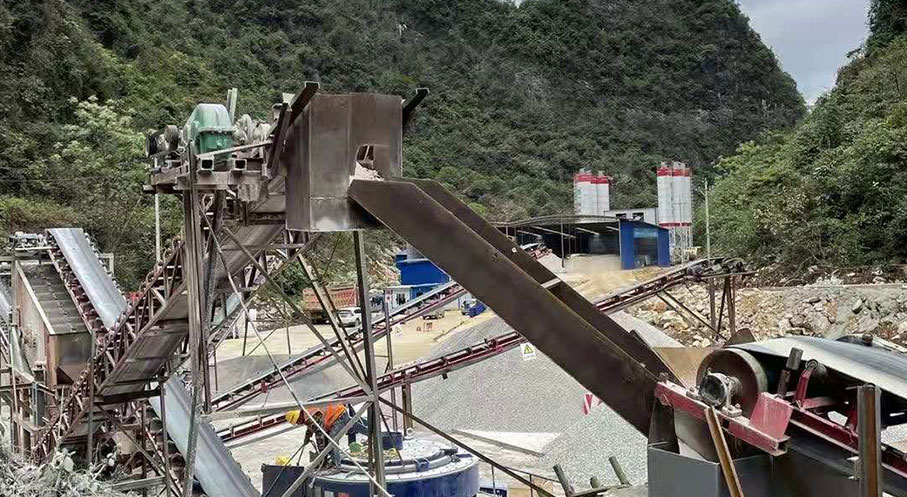
Based on four core dimensions—raw material characteristics, finished product requirements, production scale and budget costs—this article explains the selection logic of crushers and
sand making machines, provides three highly adaptable production line solutions, and a pit-avoidance guide to help you select the right equipment efficiently.
1. Must-See Before Selection: 4 Core Bases
Equipment selection is a data-driven decision. Clarify the following four points first to avoid mistakes.
1. Raw Material Characteristics
Hardness, moisture content, mud content and particle size of stones determine the equipment type. Wear-resistant models are needed for high-hard raw materials (granite, basalt, etc.). For materials with moisture content >8%, choose anti-clogging models. If mud content >5%, equip a sand washer first. For particle size >500mm, primary crushing is required.
2. Finished Product Requirements
For construction sand, a combination of sand making machine and sand washer is needed to meet relevant standards. For highway aggregates, prioritize
cone crusher + sand making machine to ensure particle shape. For hydraulic engineering, strictly control stone powder content with sand making machine and screening equipment.
3. Production Scale
Small production lines (≤100t/h) use small combined equipment with low investment. Medium lines (100-300t/h) choose efficient and stable models to balance capacity and quality. Large lines (≥300t/h) adopt large-capacity intelligent equipment for long-term operation.
4. Budget Costs
Choose mature models according to the budget. For high-hard raw materials, select low-energy and wear-resistant equipment; for medium-soft materials, choose efficient models. Consider operating and maintenance costs, and prioritize brand equipment to reduce risks.
2. Key Equipment Introduction
Jaw crushers are suitable for primary crushing of high-hard materials; cone crushers for secondary/tertiary crushing of high-hard materials; impact crushers for medium-soft materials with good particle shape; vertical shaft impact
sand making machines for high-quality sand; double-roll crushers with simple structure and low energy consumption; sand washers for removing impurities to improve sand quality.
3. Three Adaptable Production Line Solutions
Solution 1 (50-100t/h): Suitable for township construction sand, equipped with
jaw crusher + double-roll crusher + sand making machine + sand washer, low investment and small footprint. Solution 2 (100-300t/h): For highway aggregate supply, equipped with jaw crusher + cone crusher + sand making machine + sand washer, stable capacity. Solution 3 (≥300t/h): For large aggregate factories, equipped with gyratory crusher + multi-cylinder cone crusher + sand making machine, high automation.
4. Pit-Avoidance Guide
Do not blindly pursue large capacity, ignore wear part costs or environmental requirements, skip on-site survey, neglect after-sales service, or purchase equipment separately to avoid extra waste and risks.
5. Summary
Equipment selection for stone quarries is essentially a systematic project matching raw materials, finished products, scale and budget. Choosing the right equipment can achieve low investment, high capacity and quick payback, helping you gain a firm foothold in the industry.


 English
 Chinese
 French
 German
 Russian
 Italy
 Spain
 Portugal
 Japanese
 Korean
 Arabic
 Traditional