If you’re new to the sand production industry, choosing the right sand making machine can be overwhelming. With so many models and specifications on the market, it’s easy to make a wrong decision that wastes time and money. The key to selecting a high-quality, cost-effective sand making machine lies in focusing on 5 core parameters—ones that directly affect your production efficiency, product quality, and long-term profitability. This guide breaks down these essential factors in simple terms, tailored for beginners, and optimized for Google search to help you find the perfect machine for your needs.
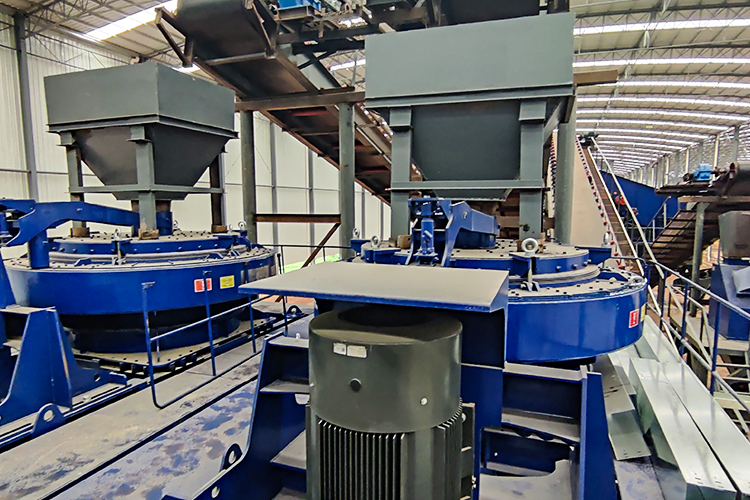
1. Production Capacity (TPH)
Production capacity, measured in tons per hour (TPH), is the first parameter to consider. It should match your actual production needs—don’t overbuy a high-capacity machine if you only need small batches of sand, and don’t settle for a low-capacity one that can’t keep up with demand. For beginners, start with a machine with 50-100 TPH if you’re targeting small to medium projects (e.g., residential construction, small concrete plants). Larger capacities (100-300 TPH) are better for commercial aggregate production. Always check the manufacturer’s rated capacity and ensure it aligns with your daily output goals.
2. Raw Material Hardness
The hardness of your raw material (e.g., river pebbles, granite, limestone) determines the type of sand making machine you need. Most
sand making machines work best with materials with a Mohs hardness of 3-7. If you’re using hard materials like granite or basalt (Mohs 6-7), choose a machine with wear-resistant components (e.g., high-manganese steel liners) to avoid frequent part replacements. For softer materials like limestone (Mohs 3-5), a standard vertical shaft impact (VSI) sand making machine will work efficiently and cost less in maintenance.
3. Finished Sand Particle Size & Shape
The particle size and shape of the finished sand directly affect its market value. For construction sand (the most common use for beginners), the ideal particle size is 0.15-4.75mm with a continuous gradation. Look for a sand making machine with adjustable settings—this allows you to customize the particle size based on your clients’ needs. Additionally, a machine with a “stone-on-stone” crushing principle will produce more cubical sand particles, which are more durable and in higher demand than irregularly shaped particles.
4. Energy Efficiency & Operating Costs
As a beginner, controlling operating costs is crucial for profitability. Choose an energy-efficient sand making machine—look for models with a power rating of 55-110 kW for small to medium capacities. Lower energy consumption means lower electricity bills. Also, consider the cost of wear parts (e.g., liners, impellers). Machines with easily replaceable, affordable wear parts will save you money in the long run. Avoid cheap machines with poor-quality components—they may have lower upfront costs but higher maintenance expenses.
5. After-Sales Service & Manufacturer Reputation
For beginners, reliable after-sales service is non-negotiable. Look for manufacturers with a good reputation in the industry (check Google reviews and customer feedback) and a global service network. Ensure they offer timely technical support, spare parts supply, and on-site installation guidance. A reputable manufacturer will also provide a warranty (1-2 years is standard) to protect your investment. Avoid unknown brands—they often lack after-sales support, leaving you stranded if the machine breaks down.
Choosing the right sand making machine doesn’t have to be complicated. By focusing on these 5 key parameters—production capacity, raw material hardness, finished sand quality, energy efficiency, and after-sales service—you can make an informed decision that fits your budget and production goals. As a beginner, start small, prioritize reliability, and choose a machine that’s easy to operate and maintain. With the right equipment, you’ll be on your way to a profitable sand production business in no time.


 English
 Chinese
 French
 German
 Russian
 Italy
 Spain
 Portugal
 Japanese
 Korean
 Arabic
 Traditional