
Hot Keywords:Scooptramjaw crusherSand Making Machine
If you’re new to the artificial sand production industry, understanding the sand making process is essential for ensuring the quality of your products and the efficiency of your production line. The sand making process involves several key steps, from raw material preparation to the final sand product. In this article, we will provide a step-by-step guide to the sand making process, explaining each step in detail and highlighting the key points to pay attention to.
Step 1: Raw Material Preparation. The first step in the sand making process is to prepare the raw material. The raw material can be various types of rocks, such as granite, basalt, limestone, river pebbles, or even construction waste. It is important to choose raw materials with high hardness, low moisture content, and low impurity content, as these factors will affect the quality of the final sand product. Before feeding the raw material into the production line, it is necessary to remove any large impurities (such as metal, wood, and plastic) to avoid damaging the equipment. In addition, if the raw material has a high moisture content, it should be dried to prevent clogging during the crushing and sand making process.
Step 2: Crushing. The second step is to crush the raw material into small particles. This is usually done using a crusher, such as a jaw crusher, cone crusher, or hammer crusher. The choice of crusher depends on the hardness and size of the raw material. For example, jaw crushers are suitable for crushing large-sized and hard materials, while hammer crushers are suitable for crushing brittle materials. The goal of crushing is to reduce the size of the raw material to a range that can be processed by the sand making machine (usually 5-20mm in size). During the crushing process, it is important to adjust the crusher parameters to ensure that the crushed particles are uniform in size.
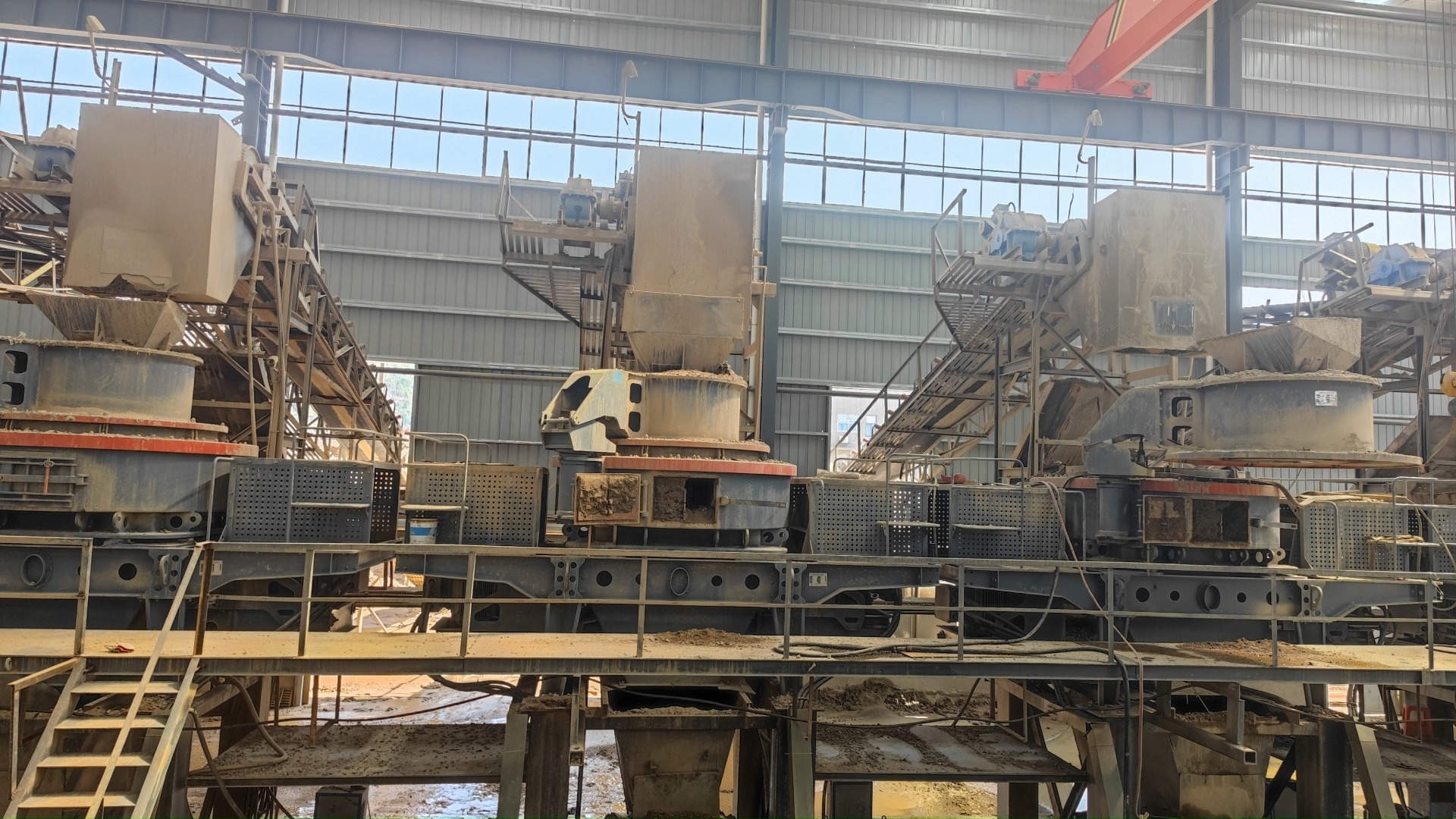
Step 3: Sand Making. The third step is the core of the sand making process: shaping the crushed particles into high-quality artificial sand. This is done using a sand making machine, such as a VSI sand making machine or an impact sand making machine. The sand making machine uses high-speed rotating impellers to throw the crushed particles into the crushing chamber, where they collide with each other and the chamber wall. This collision results in further crushing and shaping, making the sand particles round and uniform in size. The sand making machine is equipped with a grading device, which separates the sand particles into different sizes according to the project requirements. The qualified sand particles are collected as the intermediate product, while the unqualified particles are re-transported to the sand making machine for reprocessing.
Step 4: Screening. The fourth step is to screen the sand particles to ensure that they meet the required specifications. This is done using a screening machine, such as a circular vibrating screen or a linear vibrating screen. The screening machine has different layers of screens with different mesh sizes, which can separate the sand particles into different grades. For example, the top layer screen can separate large particles (above 5mm), the middle layer screen can separate medium particles (2-5mm), and the bottom layer screen can separate small particles (below 2mm). The qualified sand particles of each grade are collected separately, while the unqualified particles are re-transported to the sand making machine for reprocessing.
Step 5: Sand Washing. The fifth step is to wash the sand to remove impurities such as dust, and fine particles. This is done using a sand washing machine, such as a spiral sand washing machine or a wheel sand washing machine. The sand washing machine uses water to wash the sand particles, removing the impurities attached to the surface of the sand. This not only improves the quality of the sand but also prevents the sand from clogging the equipment during storage and transportation. After washing, the sand is dried using a dryer (if necessary) to reduce its moisture content, making it suitable for storage and use.
Step 6: Storage and Transportation. The final step is to store and transport the sand product. The sand is stored in a silo or a storage yard, and it should be protected from moisture and contamination. During transportation, the sand is usually transported using a conveyor belt, a truck, or a train. It is important to ensure that the transportation equipment is clean and dry to avoid contaminating the sand.
There are several key points to pay attention to during the sand making process. First, the raw material quality should be strictly controlled to ensure that it meets the requirements. Second, the parameters of the crusher and sand making machine should be adjusted according to the raw material and the required sand specifications. Third, the screening and sand washing processes should be thorough to ensure the quality of the final product. Fourth, the equipment should be regularly maintained to ensure its stable operation. By following these steps and paying attention to these key points, you can produce high-quality artificial sand efficiently and cost-effectively.
Xingyang Westlake Machinery Factory
+86-15138928657
Follow Us
© 2024 Xingyang Westlake Machinery Factory Site Map


If you have any queries, get in touch today! Don't hesitate. We try to take the extra step for our customer satisfaction.
 English
 Chinese
 French
 German
 Russian
 Italy
 Spain
 Portugal
 Japanese
 Korean
 Arabic
 Traditional