Small Jaw Crushers: The Best Choice for Small and Medium-Sized Sand and Stone Factories in Southeast Asia (Vietnam, etc.)
For small and medium-sized sand and stone factories in Southeast Asian countries such as Vietnam, choosing small jaw crushers is not just an option but a wise decision that perfectly fits local working conditions. These compact, cost-effective and easy-to-operate machines are tailored to the core needs of small and medium-scale sand and stone production, bringing high efficiency, low risk and stable returns to your business.
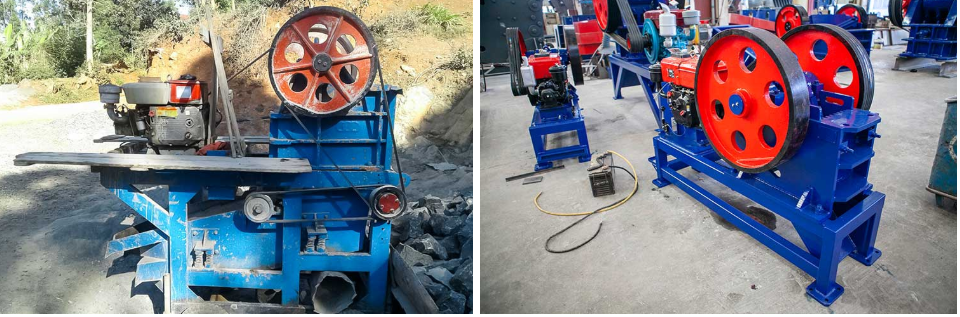
Why Small Jaw Crushers Are More Suitable for Your Small & Medium-Sized Sand & Stone Factory?
1. Perfectly Match Small & Medium-Scale Production Needs
Most small and medium-sized sand and stone factories in Southeast Asia (including those serving campuses and nearby projects) are small-scale and decentralized, mainly supplying local infrastructure, campus construction and small municipal projects. Their daily output is usually tens to hundreds of tons, far lower than that of large-scale sand and stone factories. Small
jaw crushers, with a common capacity of 1–50t/h, are perfectly suitable for such small-batch and intermittent production, avoiding energy waste and cost loss caused by "using a large machine for small work" with large equipment. They can flexibly adjust output according to actual demand, ensuring high utilization rate and no idle capacity.
2. Compact Design for Limited Site Conditions
Most small and medium-sized sand and stone factories in Southeast Asia are located in towns, near residential areas or campuses, with limited site area and strict space constraints, making it impossible to accommodate large crushing stations. Small jaw crushers feature a compact structure and small floor space (only a few square meters for common models), which can be flexibly arranged in narrow spaces without large-scale infrastructure renovation. Some models are equipped with tire or crawler chassis, enabling quick transfer and flexible operation, which is especially suitable for decentralized and temporary sand and stone production scenarios.
3. Low Investment, Fast Return on Investment
Most small and medium-sized sand and stone factories in Southeast Asia have limited financial strength and cannot afford the high purchase, installation and infrastructure costs of large crushing equipment. Small jaw crushers have a low purchase cost (only 1/5–1/3 of large equipment), with small initial investment and low startup threshold. At the same time, they have low energy consumption (motor power is mostly 7.5–30kW), which significantly reduces daily electricity expenditure. The fast return on investment (usually 6–12 months) greatly reduces financial pressure and business risks for small and medium-sized operators.
4. Easy Operation & Maintenance, Low Threshold
Local operators of small and medium-sized sand and stone factories often lack professional skills and experience in maintaining large-scale crushing equipment. Small jaw crushers have a simple structure, few core components, low failure rate and easy operation. Even non-professional personnel can get started after simple training. Daily inspection and maintenance are convenient, and wearing parts (jaw plates, thrust plates) are cheap and easy to replace, with annual maintenance costs only 1/3–1/2 of those of large equipment, which effectively reduces the difficulty and cost of later operation.
5. Adapt to Local Materials & Climatic Conditions
The sand and stone raw materials in Southeast Asian countries such as Vietnam are mainly medium and low hardness materials such as limestone, granite and river pebbles, which are perfectly suitable for the extrusion crushing principle of jaw crushers. Small jaw crushers have a large crushing ratio and adjustable discharge size (10–100mm), which can meet the needs of coarse and medium crushing of sand and stone aggregates, and the finished product has uniform particle size, complying with local building sand standards. In addition, they can handle wet and high-mud content materials without blocking, adapting to the rainy climate and high humidity of materials in Southeast Asia, ensuring stable operation in harsh working conditions.
6. Safe & Environmentally Friendly, Meeting Local Requirements
Small jaw crushers operate stably with low noise (controlled below 85dB) and small vibration, which can effectively reduce interference to nearby residents, campuses and public environments. Due to their small size, they can be equipped with simple dust removal devices to meet local environmental protection standards, avoiding environmental pollution problems and related penalties. At the same time, the equipment has a complete protection structure, low operation risk, and can ensure the safety of operators with limited professional experience.
Conclusion
The "small, decentralized, low-investment and low-maintenance" characteristics of small and medium-sized sand and stone factories in Southeast Asia (Vietnam, etc.) are highly consistent with the "compact, cost-effective, easy-to-operate and adaptable" advantages of small jaw crushers. Whether it is production scale, site conditions, investment capacity or operation level, small jaw crushers can perfectly match the actual needs of local small and medium-sized sand and stone factories, becoming the most cost-effective and practical preferred crushing equipment.


 English
 Chinese
 French
 German
 Russian
 Italy
 Spain
 Portugal
 Japanese
 Korean
 Arabic
 Traditional