
Hot Keywords:Scooptramjaw crusherSand Making Machine
In recent years, artificial sand has been increasingly used in the construction industry, gradually replacing natural sand as the main raw material for concrete, mortar, and other construction materials. There are several reasons for this trend, including the shortage of natural sand resources, the strict environmental protection policies, the superior quality of artificial sand, and the economic benefits of using artificial sand. In this article, we will explore why artificial sand is replacing natural sand in the construction industry, and the advantages of using artificial sand for your construction projects.
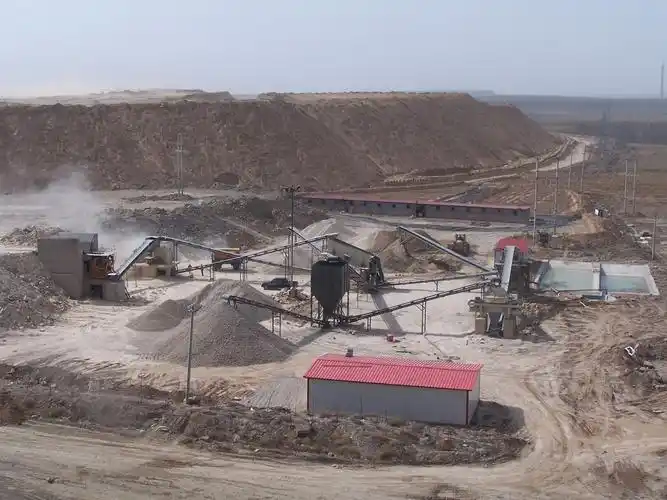
First, the shortage of natural sand resources is one of the main reasons for the rise of artificial sand. Natural sand is formed by natural weathering and erosion of rocks over thousands of years, and its reserves are limited. With the rapid development of the construction industry, the demand for natural sand has increased sharply, leading to over-exploitation of natural sand resources. In many countries, natural sand resources have been nearly exhausted, and the government has imposed strict restrictions on the exploitation of natural sand to protect the ecological environment. This has led to a shortage of natural sand supply and an increase in natural sand prices, making it difficult for construction enterprises to obtain sufficient natural sand for their projects. Artificial sand, on the other hand, can be produced from various raw materials such as rocks, ores, and construction waste, which are abundant and easy to obtain. This makes artificial sand a reliable alternative to natural sand.
Second, strict environmental protection policies have also promoted the use of artificial sand. The exploitation of natural sand will cause serious damage to the ecological environment, such as soil erosion, riverbed scouring, and water pollution. In order to protect the ecological environment, many countries have formulated strict environmental protection policies, restricting the exploitation of natural sand and encouraging the use of artificial sand. For example, in China, the government has banned the exploitation of natural sand in many rivers and lakes, and has introduced policies to support the development of the artificial sand industry. In Europe and the United States, environmental protection standards are even stricter, and the use of artificial sand has become a mandatory requirement in many construction projects. Artificial sand production, on the other hand, can be carried out in a controlled environment, and the waste generated during production can be recycled, reducing environmental pollution.
Third, artificial sand has superior quality compared to natural sand. Natural sand has uneven particle size, unstable quality, and high impurity content, which can affect the strength and durability of concrete. Artificial sand, on the other hand, is produced by professional sand making machines, which can control the particle size, shape, and impurity content of the sand. Artificial sand has uniform particle size, round shape, and low impurity content, which can improve the workability, strength, and durability of concrete. For example, artificial sand with a reasonable particle size distribution can fill the gaps between coarse aggregates, improving the density and strength of concrete. In addition, artificial sand can be adjusted according to the needs of the project, providing more flexible solutions for construction enterprises.
Fourth, using artificial sand has significant economic benefits. Although the initial investment in artificial sand production equipment is relatively high, the long-term economic benefits are obvious. The raw materials for artificial sand production are abundant and low-cost, and the production process is efficient, which can reduce the production cost of sand. In addition, artificial sand has a stable supply, which can avoid the impact of natural sand shortage on the construction schedule. For construction enterprises, using artificial sand can reduce the cost of raw materials, improve the quality of projects, and enhance their competitiveness in the market.
Fifth, the recycling of construction waste is another important factor promoting the use of artificial sand. With the increasing amount of construction waste around the world, the disposal of construction waste has become a major environmental problem. Artificial sand production can process construction waste into useful sand, which not only reduces the amount of construction waste but also realizes the reuse of resources. This not only helps to protect the environment but also reduces the cost of sand production.
In conclusion, artificial sand is replacing natural sand in the construction industry due to the shortage of natural sand resources, strict environmental protection policies, superior quality, economic benefits, and the recycling of construction waste. As the construction industry continues to develop, the demand for artificial sand will continue to grow, and the artificial sand industry will usher in a new period of development. If you are a construction enterprise or a sand producer, using artificial sand is a wise choice that can help you reduce costs, improve quality, and achieve sustainable development.
Xingyang Westlake Machinery Factory
+86-15138928657
Follow Us
© 2024 Xingyang Westlake Machinery Factory Site Map


If you have any queries, get in touch today! Don't hesitate. We try to take the extra step for our customer satisfaction.
 English
 Chinese
 French
 German
 Russian
 Italy
 Spain
 Portugal
 Japanese
 Korean
 Arabic
 Traditional